February 27, 2026
Agricultural Products

Deepthi Prasanth
Author
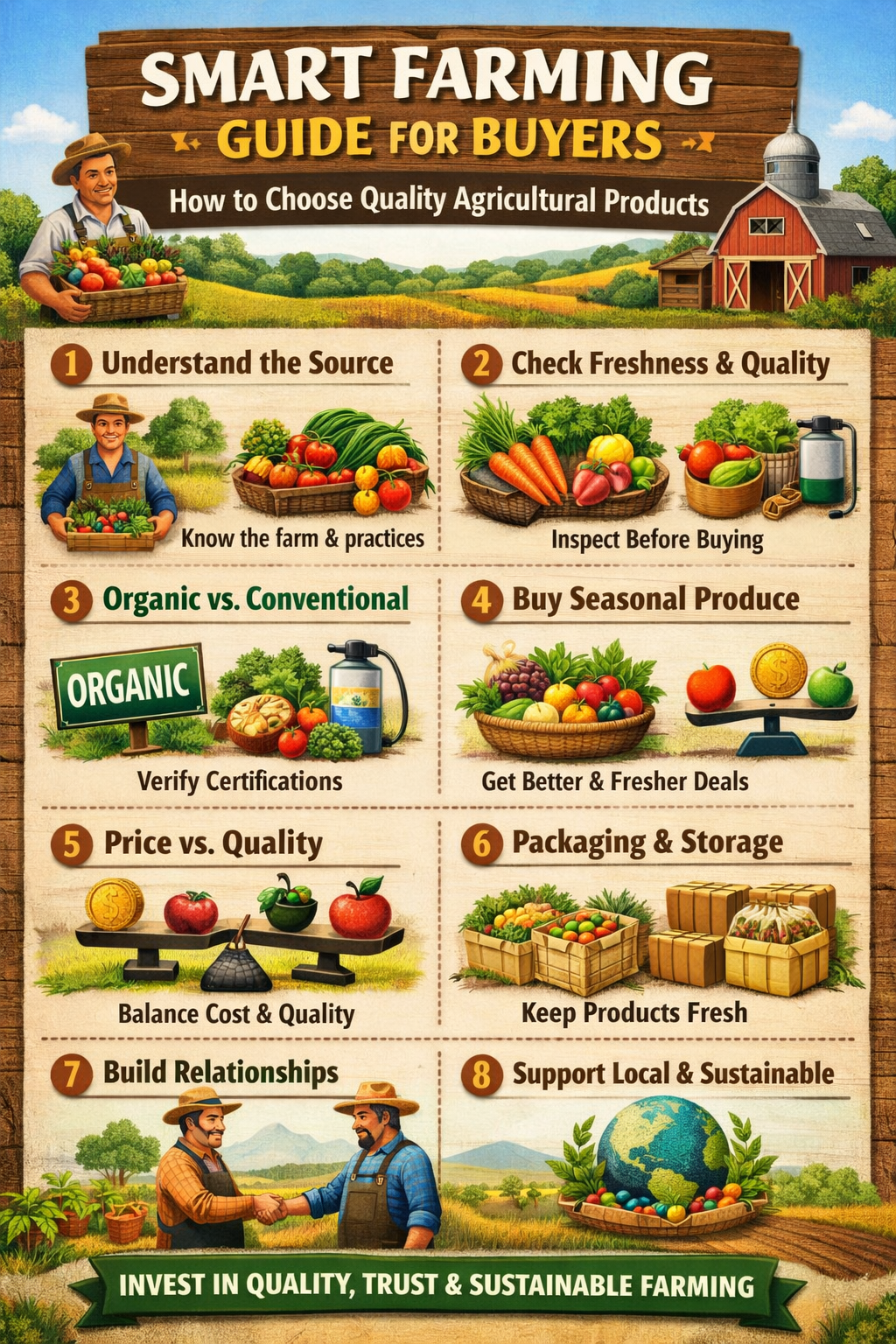
Buying agricultural products is not just about price — it’s about quality, freshness, safety, and trust. Whether you are purchasing vegetables, fruits, grains, or bulk farm produce, understanding a few key factors can help you make better decisions and build long-term relationships with farmers.
This guide is specially created for farm product buyers, retailers, wholesalers, and direct consumers.
🌱 1. Understand the Source of the Product
Before purchasing, always check:
Where is the farm located?
Is the soil quality good?
Are sustainable farming practices used?
Is the produce chemical-free or organic?
Buying directly from verified farmers increases transparency and ensures better quality control.
🥕 2. Check Freshness and Quality Indicators
Different crops have different signs of freshness:
Vegetables – Bright color, firm texture, no soft spots
Fruits – Natural smell, uniform color, no excessive bruising
Grains – Dry, clean, free from insects and moisture
Leafy greens – Crisp and vibrant, not wilted
Always inspect before bulk purchasing.
🌿 3. Organic vs Conventional Farming
Many buyers today prefer organic produce.
Organic farming avoids synthetic fertilizers and pesticides.
Conventional farming may use modern chemicals for higher yield.
If organic certification is important, verify certificates from recognized authorities like
Agricultural and Processed Food Products Export Development Authority.
🚜 4. Seasonal Buying Strategy
Buying seasonal produce helps you:
Get better prices
Ensure maximum freshness
Support local farmers
For example, mangoes are best during summer, while certain vegetables thrive during monsoon and winter seasons in India.
💰 5. Price vs Quality – Don’t Compromise
Cheaper products may:
Have lower shelf life
Contain excess chemicals
Be poorly stored
Always balance price with quality, especially if you are a reseller.
📦 6. Packaging and Storage Matters
Check for:
Proper ventilation in packaging
No moisture build-up
Hygienic handling
Improper storage can reduce shelf life even if the product is fresh at harvest.
🤝 7. Build Long-Term Relationships with Farmers
Strong buyer–farmer relationships lead to:
Better pricing
Consistent supply
Priority during high-demand seasons
Direct farm sourcing also improves trust and reduces middlemen costs.
🌍 8. Support Sustainable and Local Farming
Choosing local farmers:
Reduces transportation costs
Lowers carbon footprint
Boosts rural economy
Sustainable agriculture benefits both buyers and the environment.
🌾 Final Thoughts
Smart buyers don’t just purchase products — they invest in quality, trust, and long-term value.
By understanding farming practices, checking quality standards, and supporting responsible farmers, buyers can ensure safe, healthy, and profitable agricultural trade.
This guide is specially created for farm product buyers, retailers, wholesalers, and direct consumers.
🌱 1. Understand the Source of the Product
Before purchasing, always check:
Where is the farm located?
Is the soil quality good?
Are sustainable farming practices used?
Is the produce chemical-free or organic?
Buying directly from verified farmers increases transparency and ensures better quality control.
🥕 2. Check Freshness and Quality Indicators
Different crops have different signs of freshness:
Vegetables – Bright color, firm texture, no soft spots
Fruits – Natural smell, uniform color, no excessive bruising
Grains – Dry, clean, free from insects and moisture
Leafy greens – Crisp and vibrant, not wilted
Always inspect before bulk purchasing.
🌿 3. Organic vs Conventional Farming
Many buyers today prefer organic produce.
Organic farming avoids synthetic fertilizers and pesticides.
Conventional farming may use modern chemicals for higher yield.
If organic certification is important, verify certificates from recognized authorities like
Agricultural and Processed Food Products Export Development Authority.
🚜 4. Seasonal Buying Strategy
Buying seasonal produce helps you:
Get better prices
Ensure maximum freshness
Support local farmers
For example, mangoes are best during summer, while certain vegetables thrive during monsoon and winter seasons in India.
💰 5. Price vs Quality – Don’t Compromise
Cheaper products may:
Have lower shelf life
Contain excess chemicals
Be poorly stored
Always balance price with quality, especially if you are a reseller.
📦 6. Packaging and Storage Matters
Check for:
Proper ventilation in packaging
No moisture build-up
Hygienic handling
Improper storage can reduce shelf life even if the product is fresh at harvest.
🤝 7. Build Long-Term Relationships with Farmers
Strong buyer–farmer relationships lead to:
Better pricing
Consistent supply
Priority during high-demand seasons
Direct farm sourcing also improves trust and reduces middlemen costs.
🌍 8. Support Sustainable and Local Farming
Choosing local farmers:
Reduces transportation costs
Lowers carbon footprint
Boosts rural economy
Sustainable agriculture benefits both buyers and the environment.
🌾 Final Thoughts
Smart buyers don’t just purchase products — they invest in quality, trust, and long-term value.
By understanding farming practices, checking quality standards, and supporting responsible farmers, buyers can ensure safe, healthy, and profitable agricultural trade.