February 11, 2026
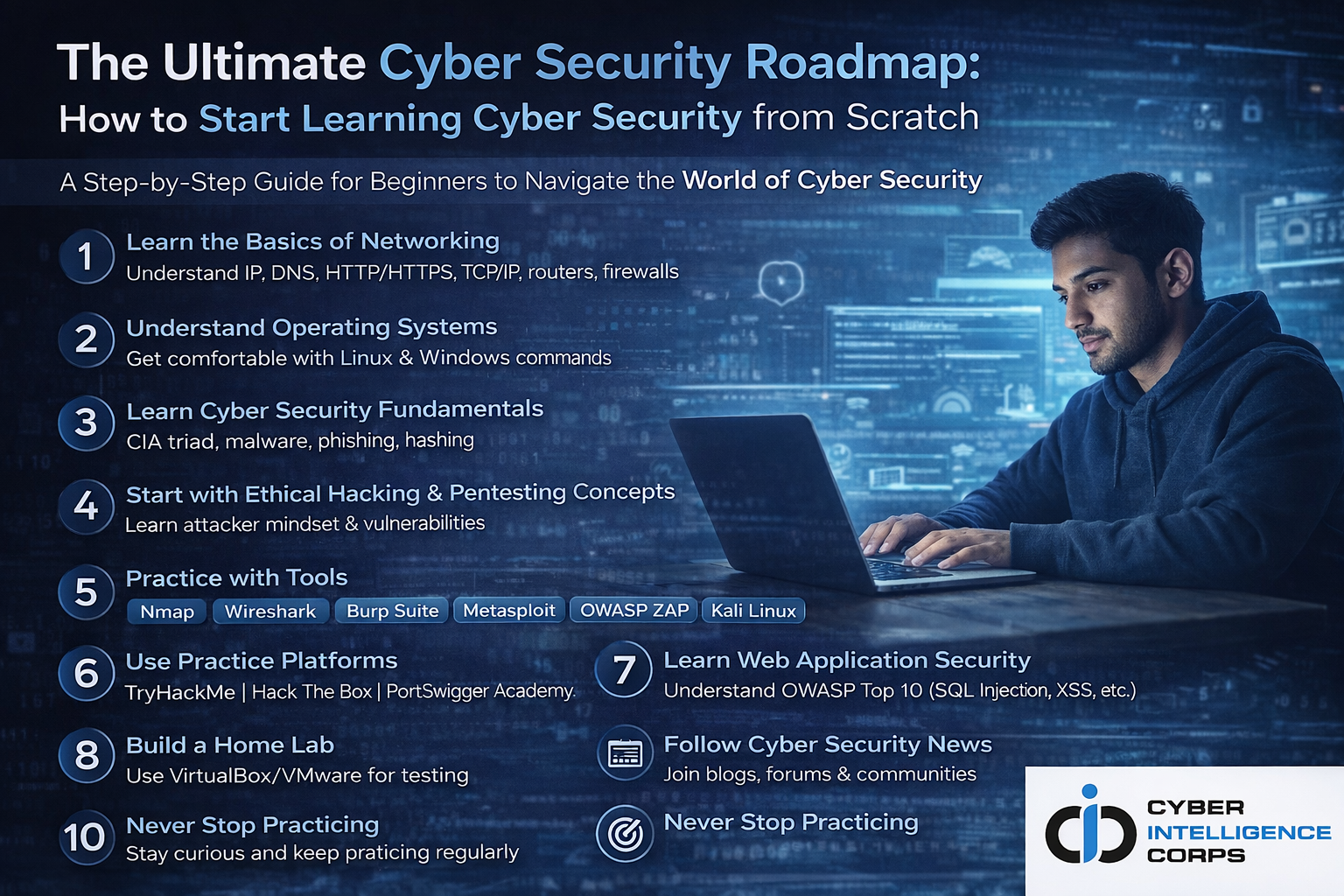
A Practical Guide to Building Skills in Cyber Security Without Expensive Courses

Athul VJ
Author
Cyber security means protecting systems, networks, and data from digital attacks. With the rapid growth of the internet, cyber threats are increasing every day. This has created a huge demand for skilled cyber security professionals.
The good news? You don’t need costly courses or a computer science degree to start learning cyber security. What you need is the right roadmap, consistency, and practice.
Step 1: Understand Computer Networking
Cyber security starts with networking. You must understand how devices communicate over the internet.
Learn about:
IP address, DNS, HTTP/HTTPS
TCP/IP model
Ports and protocols
Routers, switches, and firewalls
Step 2: Learn Operating Systems
Most cyber security tools run on Linux. Learn basic Linux commands and also understand Windows fundamentals.
Practice:
File systems
Terminal commands
User permissions
Process management
Step 3: Learn Cyber Security Fundamentals
Before jumping into hacking tools, understand the basics:
CIA Triad (Confidentiality, Integrity, Availability)
Types of malware
Phishing and social engineering
Encryption and hashing
Step 4: Introduction to Ethical Hacking & Pentesting
Learn how attackers think and how vulnerabilities are exploited. This means understanding:
Reconnaissance
Scanning
Exploitation
Reporting
Step 5: Practice with Cyber Security Tools
Start using industry tools such as:
Nmap
Wireshark
Burp Suite
Metasploit
OWASP ZAP
Kali Linux tools
Step 6: Use Online Practice Platforms
Hands-on practice is very important. Use:
TryHackMe
Hack The Box
PortSwigger Academy
OverTheWire
These platforms provide real-world labs to practice legally.
Step 7: Learn Web Application Security (OWASP Top 10)
Most attacks target web applications. Learn common vulnerabilities like:
SQL Injection
Cross-Site Scripting (XSS)
Broken authentication
Security misconfigurations
Step 8: Build Your Own Home Lab
Create a testing lab using VirtualBox or VMware. Install Kali Linux and vulnerable machines to practice safely.
Step 9: Stay Updated
Follow cyber security blogs, news, and communities. Cyber threats evolve every day, so learning never stops.
Step 10: Practice Consistently
Cyber security is a practical skill. The more you practice, the better you become.
Conclusion
Anyone with curiosity and dedication can learn cyber security. Start from the basics, practice regularly, and build your skills step by step. With time and effort, you can become a skilled cyber security professional and help protect the digital world from threats.
The good news? You don’t need costly courses or a computer science degree to start learning cyber security. What you need is the right roadmap, consistency, and practice.
Step 1: Understand Computer Networking
Cyber security starts with networking. You must understand how devices communicate over the internet.
Learn about:
IP address, DNS, HTTP/HTTPS
TCP/IP model
Ports and protocols
Routers, switches, and firewalls
Step 2: Learn Operating Systems
Most cyber security tools run on Linux. Learn basic Linux commands and also understand Windows fundamentals.
Practice:
File systems
Terminal commands
User permissions
Process management
Step 3: Learn Cyber Security Fundamentals
Before jumping into hacking tools, understand the basics:
CIA Triad (Confidentiality, Integrity, Availability)
Types of malware
Phishing and social engineering
Encryption and hashing
Step 4: Introduction to Ethical Hacking & Pentesting
Learn how attackers think and how vulnerabilities are exploited. This means understanding:
Reconnaissance
Scanning
Exploitation
Reporting
Step 5: Practice with Cyber Security Tools
Start using industry tools such as:
Nmap
Wireshark
Burp Suite
Metasploit
OWASP ZAP
Kali Linux tools
Step 6: Use Online Practice Platforms
Hands-on practice is very important. Use:
TryHackMe
Hack The Box
PortSwigger Academy
OverTheWire
These platforms provide real-world labs to practice legally.
Step 7: Learn Web Application Security (OWASP Top 10)
Most attacks target web applications. Learn common vulnerabilities like:
SQL Injection
Cross-Site Scripting (XSS)
Broken authentication
Security misconfigurations
Step 8: Build Your Own Home Lab
Create a testing lab using VirtualBox or VMware. Install Kali Linux and vulnerable machines to practice safely.
Step 9: Stay Updated
Follow cyber security blogs, news, and communities. Cyber threats evolve every day, so learning never stops.
Step 10: Practice Consistently
Cyber security is a practical skill. The more you practice, the better you become.
Conclusion
Anyone with curiosity and dedication can learn cyber security. Start from the basics, practice regularly, and build your skills step by step. With time and effort, you can become a skilled cyber security professional and help protect the digital world from threats.